Both browser and desktop app leverage the WebRTC audio stack, which includes built-in algorithms for noise and echo cancellation, meaning no additional configuration is required on Conversations app. However, the level of effectiveness may vary depending on the browser version, operating system, and hardware (e.g., microphone, headset).
Tips for Best Audio Quality
To get the clearest call experience, we recommend:
- Use a headset or dedicated microphone rather than a built-in laptop mic.
- Use a wired headset: Avoid bluetooth/wireless usage.
- Avoid overlapping audio processing: Some operating systems and headsets apply their own noise cancellation or sound enhancements. Running multiple layers of processing can sometimes reduce audio quality.
- Close other apps using your microphone to prevent conflicts.
- CPU and Power constraints can impact its effectiveness. Please ensure your device has enough processing capacity while handling voice calls.
Background noise can happen due to one of the following reasons:
1. Agents are using non-voice canceling microphones.
Headsets with a built-in microphone will generally provide a better experience for callers, as they tend to pick up less background noise than the computer’s internal microphone. This is extremely important for call center agents that work in close proximity with one another. When people hear the term “noise-canceling”, they tend to think of noise-canceling headphones which eliminate ambient noise. This type of noise cancellation benefits the headset wearer by ensuring the sound from headphones can be clearly heard. What many don’t know is that there is actually a second type of noise-canceling technology: noise cancellation in the microphone. This benefits your callers and allows them to hear agents more clearly. It’s not vital that your headsets provide both types of noise cancellations, but having even just one can provide a noticeable improvement in call quality.
2. They are using Macs, and the headset microphone is not powered.
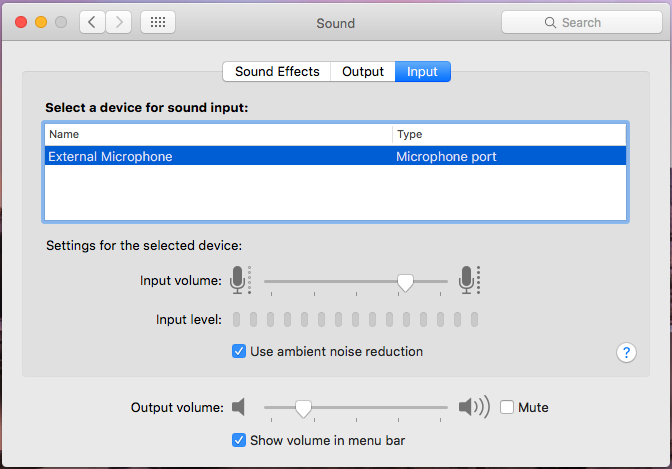
If your computer is running a Mac OS, check to make sure your headsets are compatible with Apple products. Macs use a different type of microphone input technology than other types of operating systems. This means even if you are using a headset with a built-in microphone, your Mac may not detect it, and instead use the computer’s internal microphone. An easy way to check if your headset is Mac-compatible is to plug them in and go to System Preferences → Sound → Input tab. If your computer is picking up the microphone from your headset, it should read “External Microphone”: